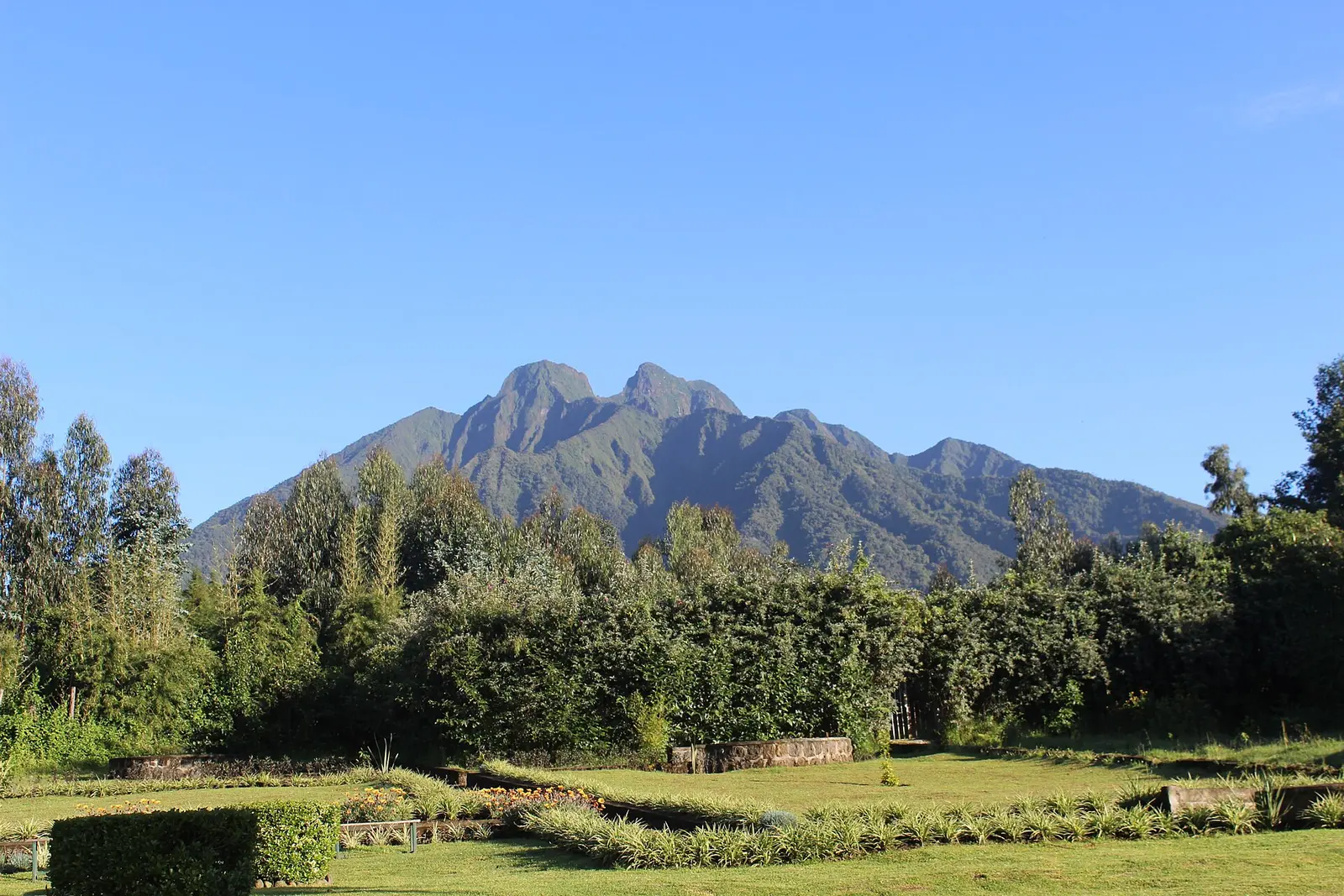
A Rwanda gorilla permit is the government-issued pass at the heart of Rwanda gorilla trekking: it allows one person to join one gorilla trekking group in Volcanoes National Park on one specific date. It costs $1,500, there are only 96 of them per day for the whole country, and without one you cannot enter the gorillas' part of the park at all.
The short version
- Price: $1,500 per person, per trek — fixed by the Rwanda Development Board (RDB)
- Supply: 96 per day (12 families × 8 people)
- Minimum age: 15 on the day of the trek
- Book: 3–6 months ahead for June–September and December–February
- Refunds: generally none once issued — get travel insurance
How much does a gorilla permit cost in Rwanda?
The Rwanda gorilla trekking permit is $1,500 per person for international visitors. It doesn't matter which operator books it, and it doesn't change between high and low season. (Rwandan citizens and some East African residents pay separate local rates set by RDB.) Rwanda raised the price to this level in 2017, doubling the previous fee, as a deliberate high-value, low-volume conservation policy: fewer visitors, each contributing more.
That policy has worked. Mountain gorilla numbers across the Virunga massif have grown steadily in the decades since tourism began, and in 2018 the IUCN moved the subspecies from Critically Endangered to Endangered — one of very few great-ape success stories. Permit revenue pays for ranger patrols, daily monitoring of every habituated family, veterinary care through the Gorilla Doctors programme, and a revenue-sharing scheme under which a portion of park income is invested in schools, clinics and water projects in the communities bordering the park.
What the permit includes
- Entry to Volcanoes National Park for your trek
- The morning briefing at Kinigi park headquarters
- Your RDB ranger guide and the team of trackers who locate the family
- Armed escort for the group (a standard safety measure in the forest)
- One hour in the presence of your assigned gorilla family
- A gorilla trekking certificate, usually handed out after the trek
What it does not include
- Transport from Kigali or your lodge to Kinigi and on to the trailhead
- Accommodation and meals
- Porters (hired at the trailhead for a modest fee)
- Tips for your guide and trackers
- Your Rwandan visa, travel insurance and flights
That gap — between the permit and a complete trekking day — is what tour operators fill. Our private day trip from Kigali adds a $500 service fee for a private 4x4, driver-guide, breakfast, lunch and Wi-Fi in the car, making $2,000 per person in total. You can see every line in our gorilla trekking cost breakdown.
Rwanda gorilla permit price: 2026 and past years
| Period | International visitors | Notes |
|---|---|---|
| 2026 | $1,500 | Current rate, all year |
| 2025 | $1,500 | Unchanged |
| 2017 to 2024 | $1,500 | Raised from $750 in May 2017 |
| 2020 (temporary) | Reduced | Short-lived COVID-19 recovery rates, since expired |
Rwandan citizens and East African residents pay lower local rates set by RDB. Ask us for the current figures if they apply to you. A website quoting a much lower price for international visitors is usually showing an expired COVID-era rate or another country's permit. Compare Uganda's in Rwanda vs Uganda gorilla trekking.
Official gorilla permit fees by visitor category
These are the Rwanda Development Board's own fee tables, the same for every operator:
| Visitor category | Official RDB fee (adult) |
|---|---|
| Foreigner | $1,500 |
| Foreign resident in Rwanda | $500* |
| African citizen / foreign resident in Africa | $500* |
| East African citizen | $200* |
| Rwandan citizen | $200* |
Source: Rwanda Development Board official booking portal, checked 18 October 2026. Promotional rates (*) are not valid from June to October 2026. Foreign residents need at least four consecutive months of residency or a work permit.
The low-season gorilla permit discount (November to May)
From November to May, RDB offers 30% off the gorilla permit, bringing it to $1,050 instead of $1,500, when you combine your trek with a stay in Rwanda's other national parks:
- Two nights in Akagera or Nyungwe National Park (hotel payment receipt and one paid activity), or one night in each, consecutive, with an activity.
- One discounted gorilla permit per person for each 3-day / 2-night stay. Trekking twice needs a further 3 days / 2 nights.
- A no-show on your trekking date means the permit expires.
Our 5-day gorillas & Big Five, 5-day gorillas & chimpanzees, 7-day and 10-day safaris all meet these conditions. Travel between November and May and we apply the discount to your quote: $450 less per person.
Where to buy a gorilla permit in Rwanda
| Where | How it works | Good for |
|---|---|---|
| Licensed operator (us) | Send your date and passport details; we secure the permit in your name and can arrange transport to Kinigi | Most travellers: one contact for permit and logistics |
| Rwanda Development Board online portal | Book directly through RDB's official tourism booking system | Independent travellers with their own transport |
| RDB office in Kigali | Book in person | People already in Kigali |
The permit price is identical everywhere. What an operator adds is certainty: we monitor availability daily, match your permit with transport for the 7:00 AM briefing, and deal with RDB if anything changes. Check gorilla permit availability for your date.
How many gorilla permits are there per day?
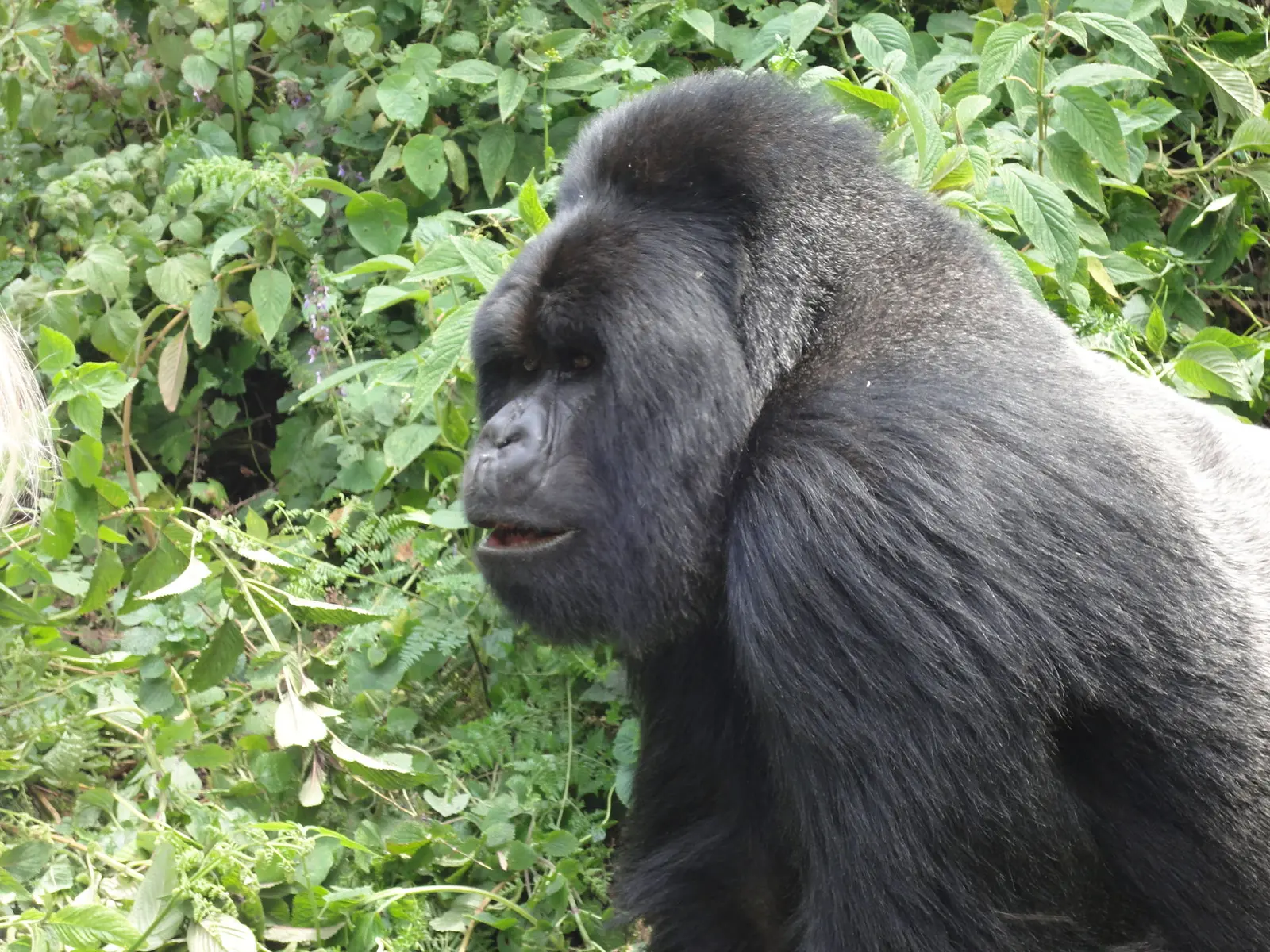
There are 12 gorilla families in Volcanoes National Park open to standard trekking. Each can be visited by a single group of up to 8 people per day, for one hour. That gives a national daily ceiling of 96 gorilla permits — fewer seats than a single-aisle aircraft, for every traveller in the world who wants to see mountain gorillas in Rwanda that day.
Those limits aren't arbitrary. Gorillas are susceptible to human respiratory infections, and every additional visitor is a potential source of disease. Limiting group size and visit length also reduces stress on the animals and the disturbance to their feeding and resting routine. Researchers who monitor the families daily have found that well-managed visits under these limits don't measurably disrupt the gorillas' behaviour.
When do gorilla permits sell out?
Ninety-six permits a day sounds like a lot until you consider demand. Through the two dry seasons — June to mid-September and mid-December to February — permits for many dates are fully booked months in advance, especially around the European summer holidays, Christmas and New Year, and dates when large groups or international conferences are in Kigali.
| Travel period | Demand | Book at least |
|---|---|---|
| June – mid-September | Very high | 4–6 months ahead |
| Mid-December – early January | Very high | 4–6 months ahead |
| January – February | High | 3–4 months ahead |
| Late September – November | Moderate | 1–2 months ahead |
| March – May | Lower | 4–8 weeks ahead |
These are guidelines, not guarantees. Single dates in the low season can still be sold out because of a large group, and last-minute permits occasionally become available in peak season when other bookings change. If your dates are flexible by even a day or two, tell us — it widens the options considerably. More on timing in our best time for gorilla trekking guide.
Who can get a gorilla permit?
Anyone aged 15 or over on the day of the trek, in reasonable health. There is no upper age limit and no fitness test; the park simply needs you to be able to walk on uneven forest terrain at altitude for a few hours. Visitors who are visibly unwell — especially with a cough, cold or fever — may be refused on the day, because of the infection risk to the gorillas. If that happens, the permit is usually not refunded, which is another reason travel insurance matters.
If you have limited mobility, tell us when you book. Rangers can assign groups with easier needs to families that are usually closer to the trailhead, and with notice it is sometimes possible to arrange porters to carry a trekker on a stretcher-style chair. See age limits, seniors and families for more.
Rwanda permit vs Uganda and DR Congo
Mountain gorillas can also be trekked in Uganda (Bwindi Impenetrable National Park and Mgahinga Gorilla National Park) and in the Democratic Republic of Congo (Virunga National Park, subject to security conditions). Uganda's standard permit is $800; Uganda also offers a longer habituation experience for $1,500.
The Rwandan permit costs more, but it comes with real advantages: a 2.5-hour transfer from an international airport instead of a full day's drive, generally shorter and less steep treks, and the ability to fit gorillas into a short trip or a single day. We break the comparison down in detail in Rwanda vs Uganda gorilla trekking.
How to get your gorilla permit
The process with us is straightforward:
- Send your preferred date(s) and the number of trekkers, using our permit availability search or WhatsApp.
- We check RDB availability — usually the same day — and send a written quote.
- You send passport details (full name, nationality, passport number, date of birth) for each trekker.
- Pay the permit amount. RDB requires permits to be paid in full to be issued, so this is taken first.
- Receive your permit confirmation in each traveller's name, followed by your trek-day plan.
Our full walk-through — including payment options, what happens if your flight changes, and how to combine permits with other activities — is in how to book a gorilla permit in Rwanda.
Avoid permit scams
Only buy from an RDB-licensed operator or RDB itself. Warning signs: permits "discounted" below $1,500, a seller who won't give you a company name, address and licence, or payment requested only to a personal mobile-money account. Your confirmation should show your name, the date and the park. If you are unsure about any offer, send it to us — we will tell you honestly whether it looks right.
Changing or cancelling a permit
Once issued, gorilla permits are generally non-refundable. Date changes can sometimes be requested through RDB depending on circumstances and availability, but they are not guaranteed. In the rare event that RDB itself cancels trekking (for example, for the gorillas' health or park safety), RDB's own policy applies. Our booking terms explain how we handle each case. Practically: buy travel insurance that includes trip cancellation, and choose your trek date with a margin after your arrival flight.
Gorilla permit questions
How much is a gorilla permit in Rwanda in 2026?
A Rwanda gorilla trekking permit costs $1,500 per person per trek for international visitors. The price is set by the Rwanda Development Board (RDB) and is the same whichever licensed operator books it. Rwandan citizens and East African residents pay separate local rates set by RDB.
How much was the Rwanda gorilla permit in 2025?
The same $1,500 per person for international visitors. The fee has been at this level since 2017, apart from a temporary COVID-era reduction in 2020.
Where can I buy a gorilla permit in Rwanda?
From the Rwanda Development Board (at its offices or through its official online booking portal), or through a licensed tour operator such as us. Most travellers use an operator, because the permit has to be matched with a date, passport details and transport to Kinigi for the 7:00 AM briefing.
Can I check Rwanda gorilla permit availability online?
Yes. Use the availability search on this page: choose your date and group size for an instant answer, then secure your permits in one step.
Is there a discount on Rwanda gorilla permits?
Yes, from November to May. RDB gives 30% off the gorilla permit ($1,050 instead of $1,500) when you also stay two nights in Akagera and/or Nyungwe National Park with an activity. Our 5, 7 and 10-day combination safaris meet these conditions, and we apply the discount to your quote.
How much is the gorilla permit for East Africans and residents?
RDB lists promotional rates of $200 for Rwandan and East African citizens and $500 for foreign residents in Rwanda and African citizens. These promotional rates do not apply from June to October 2026, and residents need at least four consecutive months of residency.
How many gorilla permits are available per day?
96: 12 habituated families, each visited by a maximum of 8 people per day.
Is the gorilla permit refundable?
RDB permits are generally non-refundable once issued. Date changes may be possible in some circumstances, subject to RDB approval and availability. Travel insurance that covers cancellation is strongly recommended.
Does the permit include transport or a guide?
The permit includes park entry for the day, your RDB ranger guide and the trackers, and one hour with the gorillas. It does not include transport to Kinigi, accommodation, meals, porters or tips.
Do I need my passport to book a permit?
Yes. Permits are issued in the traveller's name using passport details, and you may be asked to show your passport at the Kinigi briefing.
Can I use one permit for two days?
No. A permit is valid for one trek on one date. To trek twice, you need two permits, which many travellers do, as each family is different.