Mountain gorillas are one of two subspecies of eastern gorilla, and they live nowhere but two small forest blocks in the heart of Africa. Fewer than 1,100 exist. That number would have seemed impossible forty years ago — it was half that — and it is one of conservation's great stories.
How many mountain gorillas are in Rwanda?
Rwanda's mountain gorillas live in Volcanoes National Park, part of the Virunga population of around 600 shared with Uganda and the DR Congo. Gorillas move freely across the borders, so counts are made for the whole massif rather than per country. Of the families on the Rwandan side, 12 are habituated for gorilla trekking in Rwanda.
Where mountain gorillas live
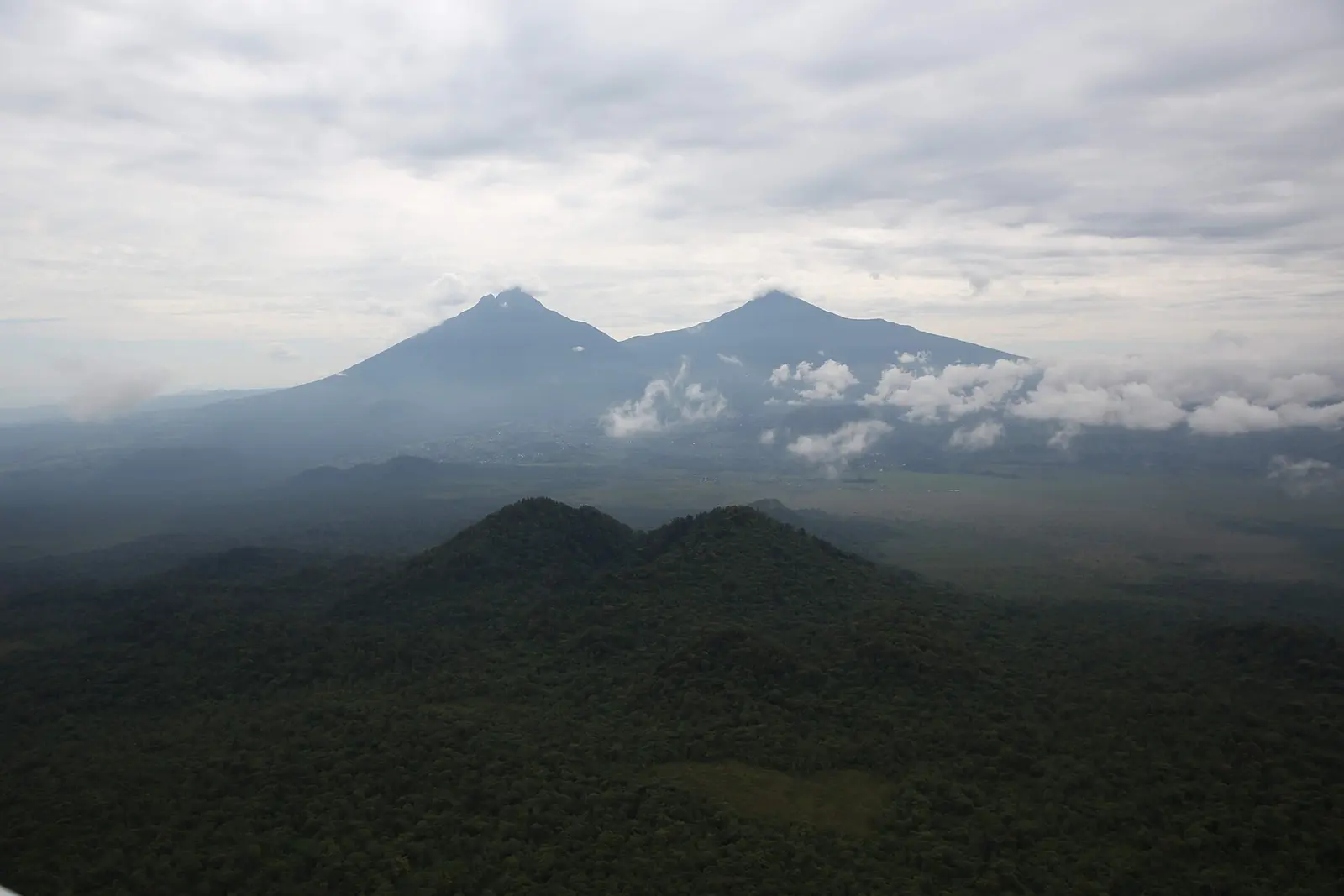
There are two populations. The first lives in the Virunga massif, the chain of volcanoes shared by Rwanda's Volcanoes National Park, Uganda's Mgahinga Gorilla National Park and the DRC's Virunga National Park. The second lives in Bwindi Impenetrable National Park in Uganda, plus the adjoining Sarambwe reserve in the DRC. They are high-altitude animals, living mostly between about 2,200 and 4,000 metres in montane forest, bamboo and sub-alpine vegetation.
How many are left?
The most recent complete surveys counted around 600 mountain gorillas in the Virungas and around 460 in Bwindi–Sarambwe — just over 1,000 in total. The Virunga population has more than doubled since its low point in the early 1980s. In 2018, the IUCN reclassified mountain gorillas from Critically Endangered to Endangered — the only great ape whose numbers are known to be increasing in the wild.
Size and appearance
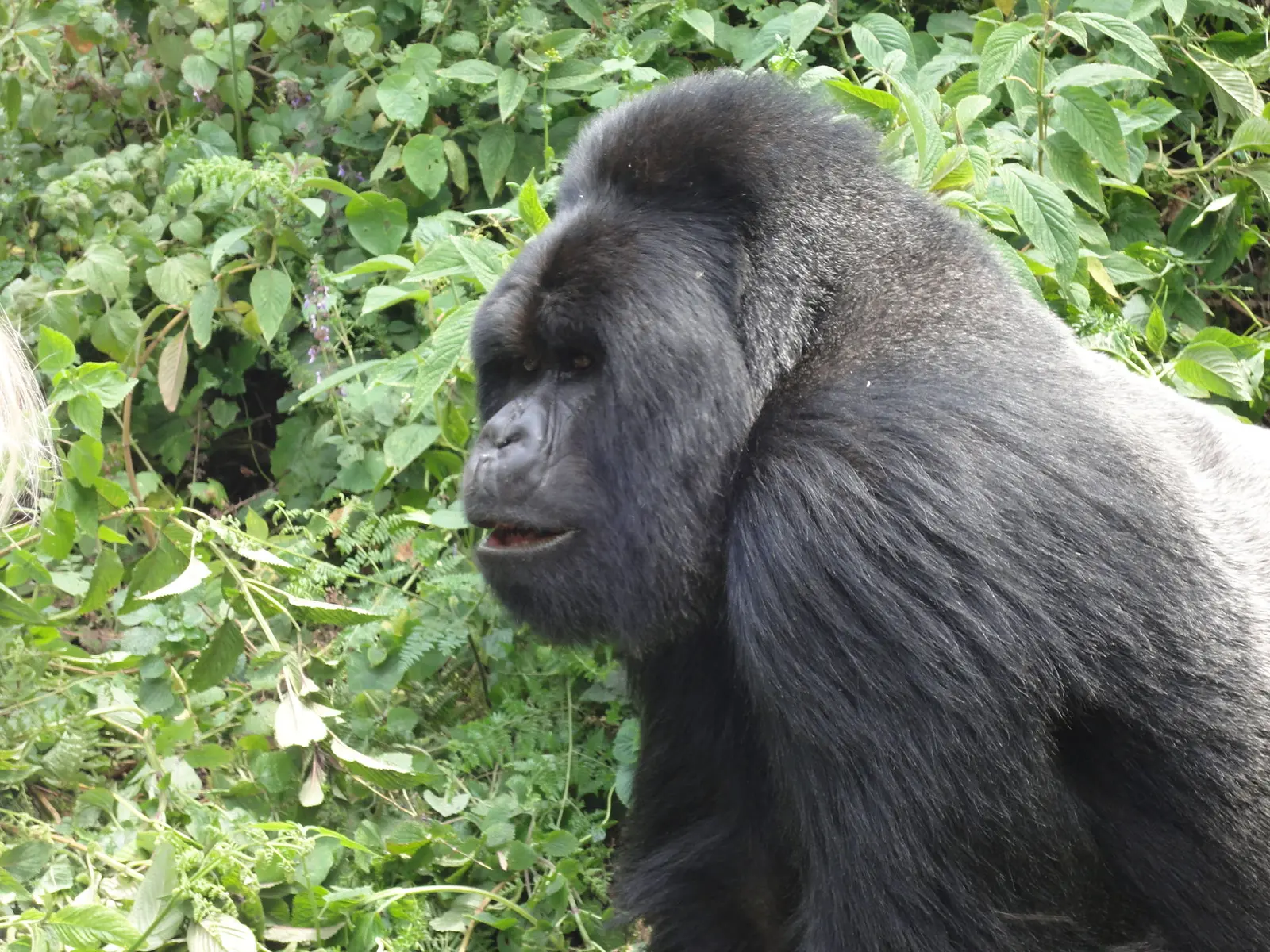
| Adult male (silverback) | Adult female | |
|---|---|---|
| Weight | Around 160–200+ kg | Around 70–100 kg |
| Standing height | About 1.5–1.8 m | About 1.3–1.5 m |
| Distinctive feature | Silver saddle of hair on the back from about age 12 | Smaller, no silver saddle |
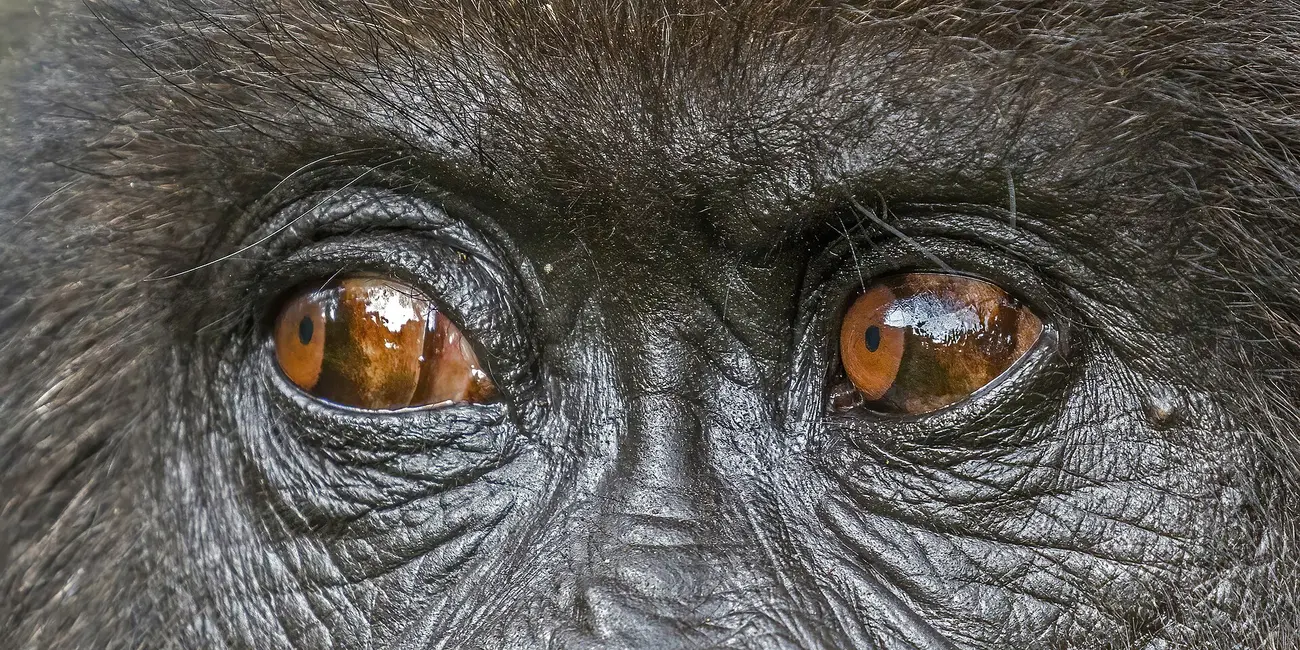
Mountain gorillas have longer, thicker hair than lowland gorillas — an adaptation to the cold — and each individual can be recognised by its nose print, the pattern of wrinkles above the nostrils. Researchers use these to identify every gorilla in the habituated families.
Family life
Mountain gorillas live in stable groups, usually of around 5 to 30 individuals, led by a dominant silverback. Some groups contain more than one silverback, with a clear hierarchy. The silverback decides where the group travels, mediates disputes and defends the family. Females usually leave the group they were born into when they mature and join another, while young males either leave to live alone and eventually found their own families, or stay and wait for a chance to rise in their natal group.
A gorilla's day is a rhythm of feeding and resting. Mornings are busy with eating; a long midday rest follows, when adults doze and youngsters play; then more feeding in the afternoon. Each evening, every gorilla except dependent infants builds a fresh nest of bent vegetation, on the ground or in low trees. Trackers start each day at these nests.
Diet
Mountain gorillas are almost entirely vegetarian. They eat leaves, stems, pith and shoots — wild celery, thistles, nettles, bamboo shoots and climbing Galium vines are favourites — along with some bark, roots, flowers, fruit and the occasional ant or grub. An adult male can eat 20–30 kg of vegetation a day. Their diet is so moisture-rich that they rarely need to drink.
Babies and growing up
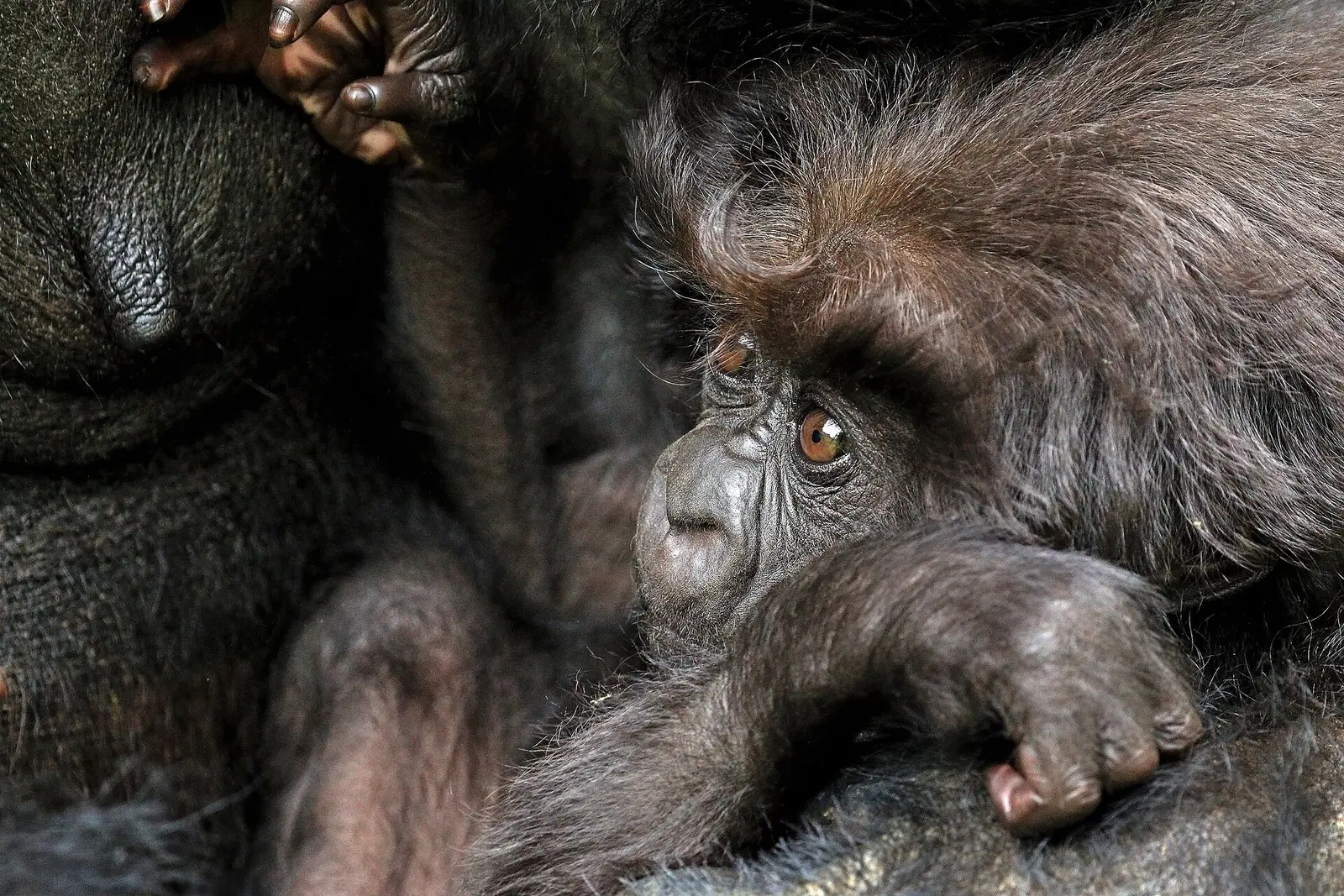
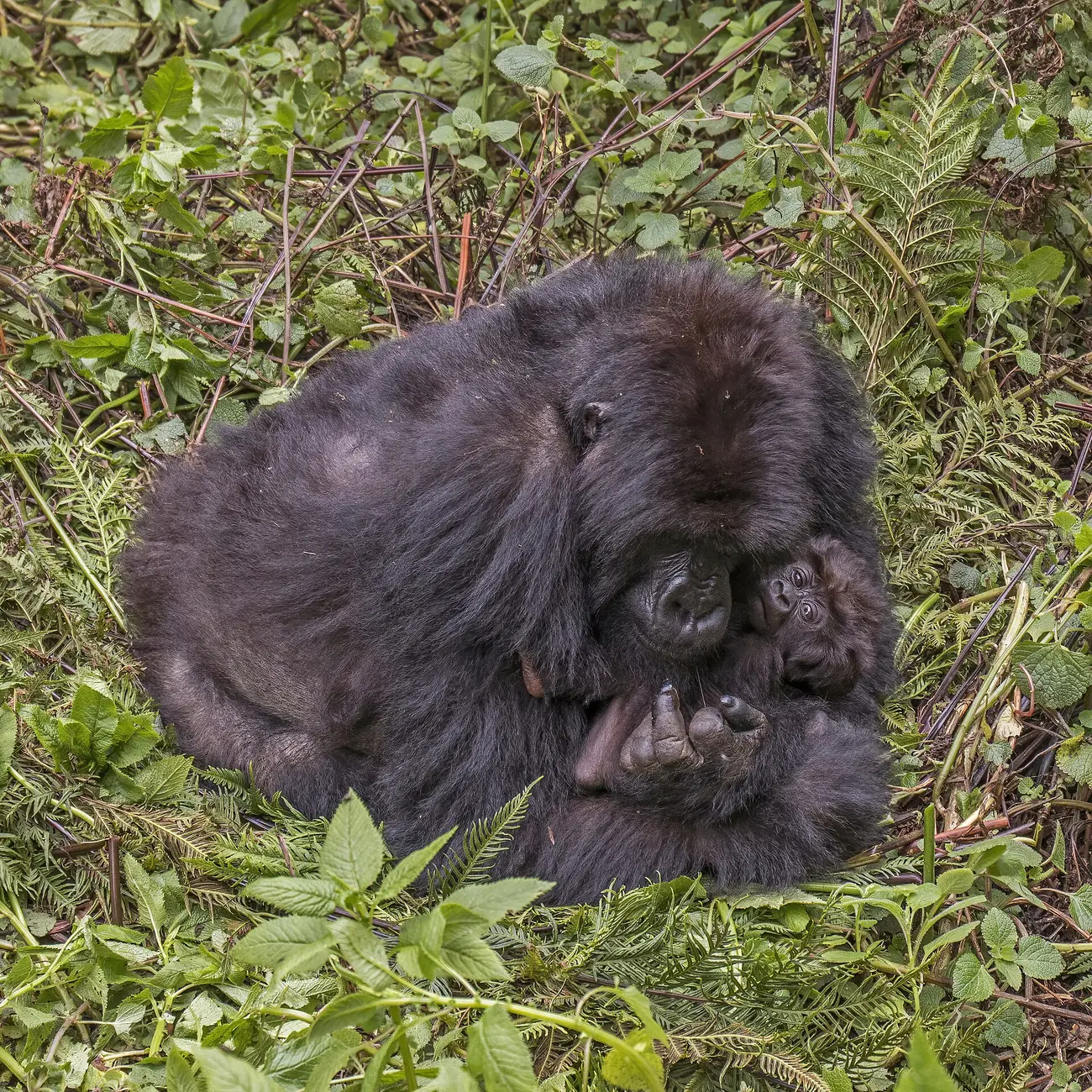
Pregnancy lasts about eight and a half months. Newborns weigh around 2 kg and cling to their mother's chest, moving onto her back at about four months. Infants are weaned at around three to four years. Because females have one baby every four years or so and may only raise a handful in a lifetime, population recovery is slow — every infant matters.
Communication and intelligence
Gorillas communicate with more than a dozen distinct vocalisations: contented belch-like rumbles while feeding, sharp barks of alarm, screams during disputes. The famous chest-beat is a display that signals size and status — research suggests its sound carries information about the beater's body size. Gorillas use simple tools, show clear individual personalities, and form long-lasting social bonds. They also mourn: researchers have documented gorillas staying near and interacting with dead group members.
Threats
- Disease — especially respiratory infections caught from humans. The main reason for the trekking rules.
- Snares set for antelope, which can maim or kill gorillas.
- Habitat pressure — the parks are islands surrounded by some of Africa's densest farming populations.
- Insecurity in parts of the wider region.
- Climate change, which may shift the vegetation zones they depend on.
Why the comeback worked
Daily monitoring of every habituated family; ranger patrols removing snares; veterinary teams able to treat injured or sick gorillas in the field; and tourism that gives gorillas economic value, funds protection and shares revenue with neighbouring communities. When you buy a gorilla permit, you're paying directly into that system. See gorilla permits and Kwita Izina, Rwanda's annual celebration of new births.
Mountain gorilla questions
How many mountain gorillas are left?
A little over 1,000 at the most recent complete counts — roughly 600 in the Virunga massif (Rwanda, Uganda, DRC) and around 460 in Bwindi and Sarambwe.
Are mountain gorillas endangered?
Yes. In 2018 the IUCN moved mountain gorillas from Critically Endangered to Endangered after decades of population growth driven by intensive protection.
How big is a silverback gorilla?
Adult male mountain gorillas commonly weigh around 160–200 kg or more and stand about 1.5–1.8 m when upright. Females weigh roughly half as much.
What do mountain gorillas eat?
Mostly leaves, stems, shoots and pith — wild celery, thistles, nettles, bamboo shoots, Galium vines — plus some bark, roots, flowers and occasionally insects. An adult male can eat around 20–30 kg of vegetation a day.
How long do mountain gorillas live?
Typically around 35–40 years in the wild, sometimes longer.
Are mountain gorillas dangerous?
Habituated mountain gorillas are generally calm and tolerant of quiet visitors. Silverbacks can make bluff charges if they feel threatened; following your ranger's instructions keeps everyone safe.