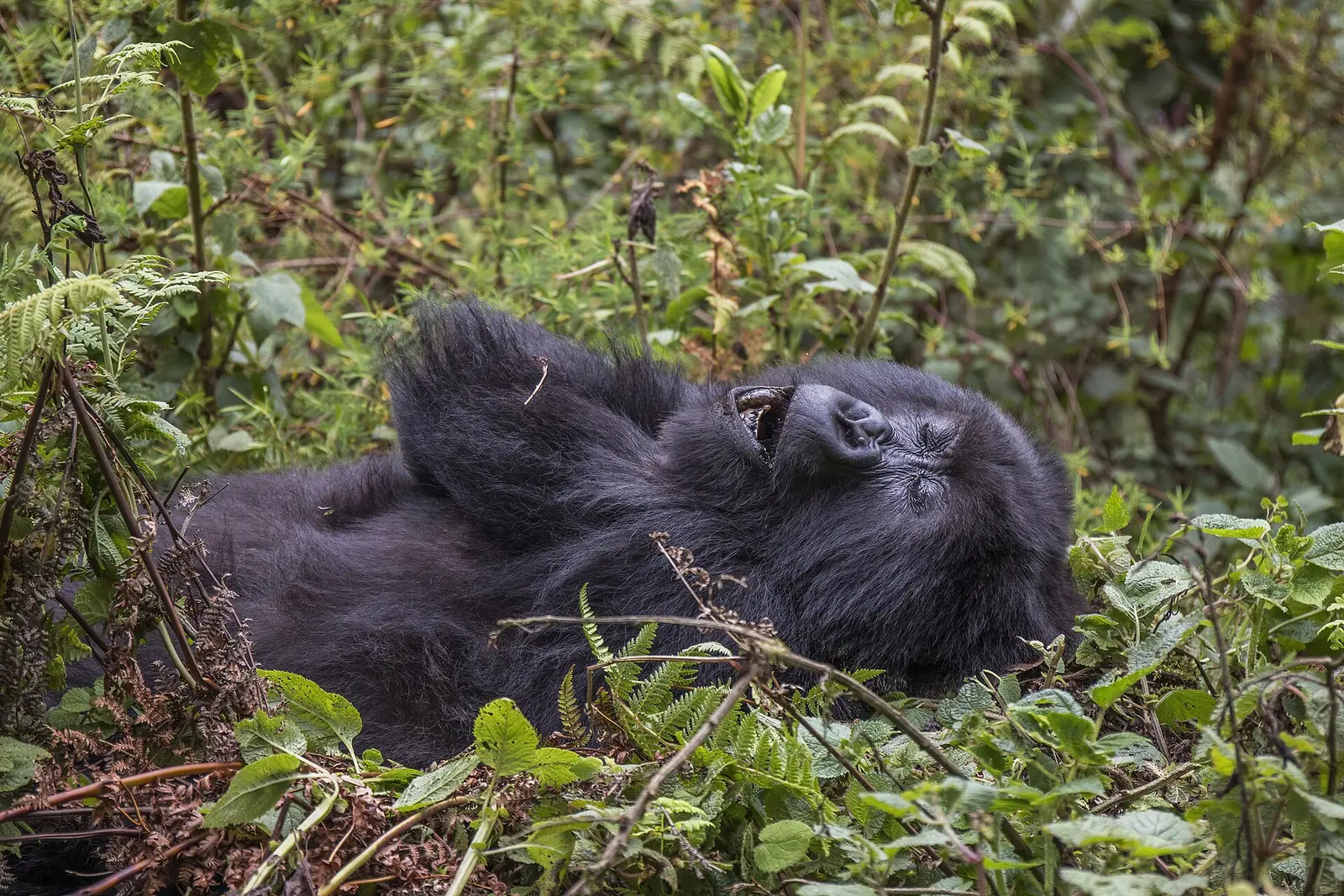
Gorilla photography is harder than it looks. You're photographing black, shaggy animals in deep shade with bright gaps of sky behind them — the toughest exposure problem in wildlife photography — with no flash and a strict one-hour limit. Preparation makes all the difference.
Camera settings
| Setting | Starting point | Why |
|---|---|---|
| Mode | Shutter priority or manual with auto-ISO | Control motion blur, let ISO float |
| Shutter speed | 1/250s (resting) – 1/500s (moving) | Gorillas move suddenly |
| Aperture | Wide open, f/2.8–f/5.6 | Maximise light, soften busy backgrounds |
| ISO | Auto, max 3200–6400 | Grain is better than blur |
| Metering | Spot or centre-weighted on the face | Avoid underexposed black fur |
| Exposure compensation | −0.3 to −1 EV in bright patches | Protect highlights on shiny fur |
| Focus | Single point / eye detection on the eyes | Vegetation fools wide-area AF |
| Drive | Continuous (burst) | Catch expressions and movement |
| Flash | Off | Forbidden |
Lenses
Gorillas are often closer than you expect — sometimes just a few metres. A 24–105 mm or 24–70 mm is versatile for whole-family shots, and a 70–200 mm f/2.8 is excellent for portraits. A 100–400 mm can be useful, but a long, slow telephoto in dense forest is often a frustration. Don't change lenses during your hour if you can avoid it — bring two bodies, or pick one zoom.
Exposing for black fur
Camera meters see a dark gorilla and overexpose the bright background, or see the bright background and render the gorilla as a black blob. Meter on the face, check your histogram early, and use exposure compensation. Shoot RAW so you can lift shadows later. Overcast days are your friend: soft, even light is perfect for gorillas.
Composition
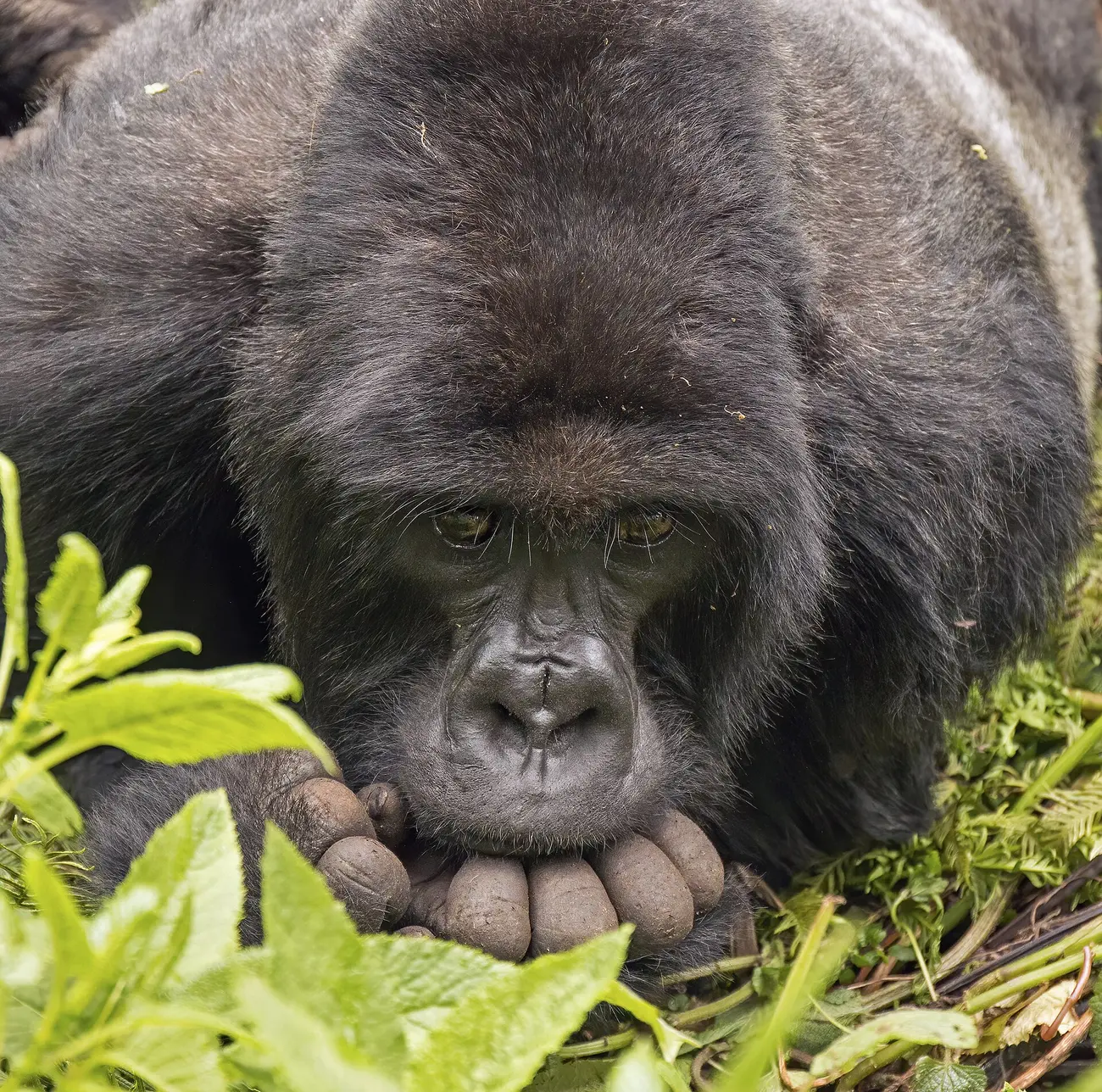
- Eyes in focus. Gorilla eyes are deep-set and brown; nail focus there.
- Get low. Crouch to eye level when it's safe and your ranger agrees.
- Hands and feet. Gorilla hands are astonishingly human — close-ups tell the story.
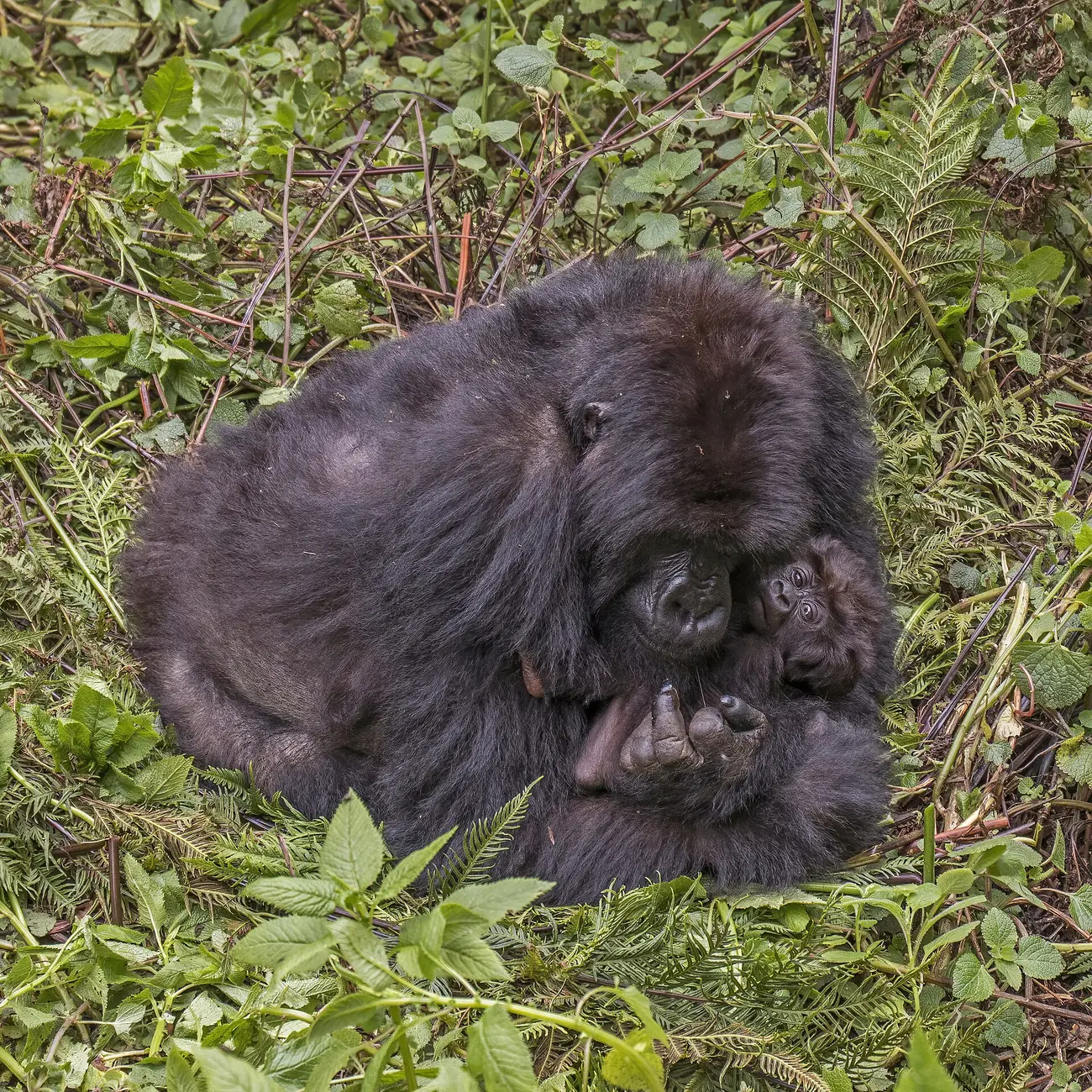
- Interactions. Mother and infant, grooming, play between juveniles.
- Context. One wider frame showing the forest and your group.
Smartphone photography
Modern phones handle forest light surprisingly well. Use the 2x or 3x lens rather than digital zoom, tap the gorilla's face to set exposure and slide brightness down slightly, turn off flash, and use burst or Live Photo for moving animals. Night mode can help in very dark spots if the gorilla is still.
Video
Short clips of feeding sounds, chest-beats and infants playing are often more evocative than stills. Keep clips short, hold the camera steady against your body, and turn on wind reduction.
Protecting your gear
Bring a rain cover or a simple plastic sleeve (not a single-use plastic bag — they're banned in Rwanda), lens cloths, spare batteries kept warm in an inner pocket, and a dry bag for your daypack. Your porter will carry the bag; keep the camera with you.
The most important tip
Put the camera down for at least ten minutes of your hour. You will never get that time back, and the memory you carry is worth more than another frame.
Photography questions
Can I take photos during gorilla trekking?
Yes — photography is allowed and encouraged, but flash is forbidden. Tripods and selfie sticks aren't practical and may not be permitted with the gorillas.
What is the best lens for gorilla photography?
A fast zoom covering roughly 24–105 mm or 70–200 mm. Gorillas are often close, so very long telephoto lenses are rarely necessary and can be limiting in dense vegetation.
What camera settings should I use for gorillas?
Shutter priority or manual at around 1/250–1/500s, wide aperture, auto-ISO allowing up to 3200–6400, and spot or centre-weighted metering. Expose for the face, not the background.
Can I film video of the gorillas?
Yes, for personal use. Commercial filming requires separate permission from RDB.
Are drones allowed in Volcanoes National Park?
No, not without specific authorisation. Rwanda strictly regulates drones and they are not permitted near the gorillas.