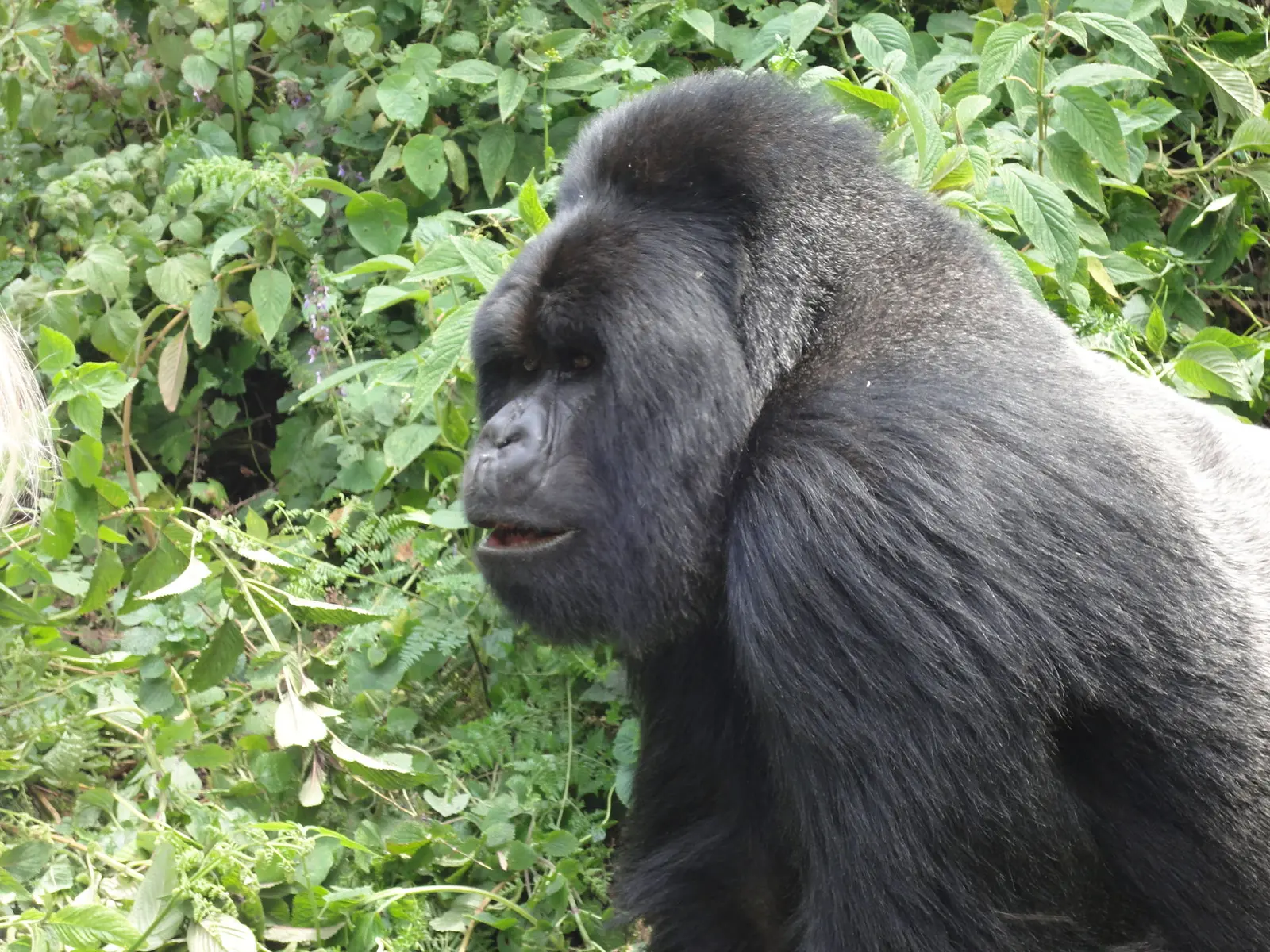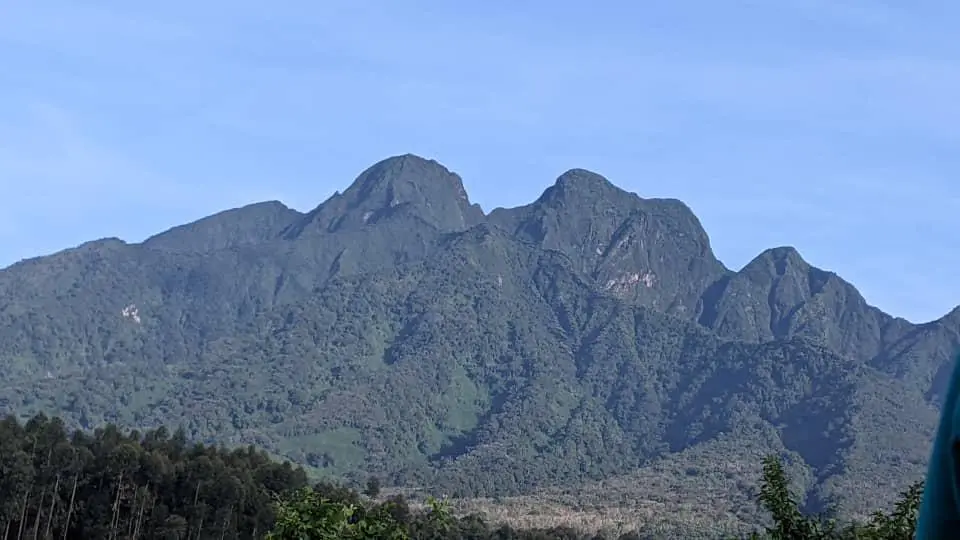
Volcanoes National Park — Parc National des Volcans — covers the Rwandan slopes of the Virunga mountains in the country's far north-west. It's small, at around 160 km², but it holds a significant share of the world's mountain gorillas and is where nearly every gorilla trek in Rwanda begins.
The five volcanoes
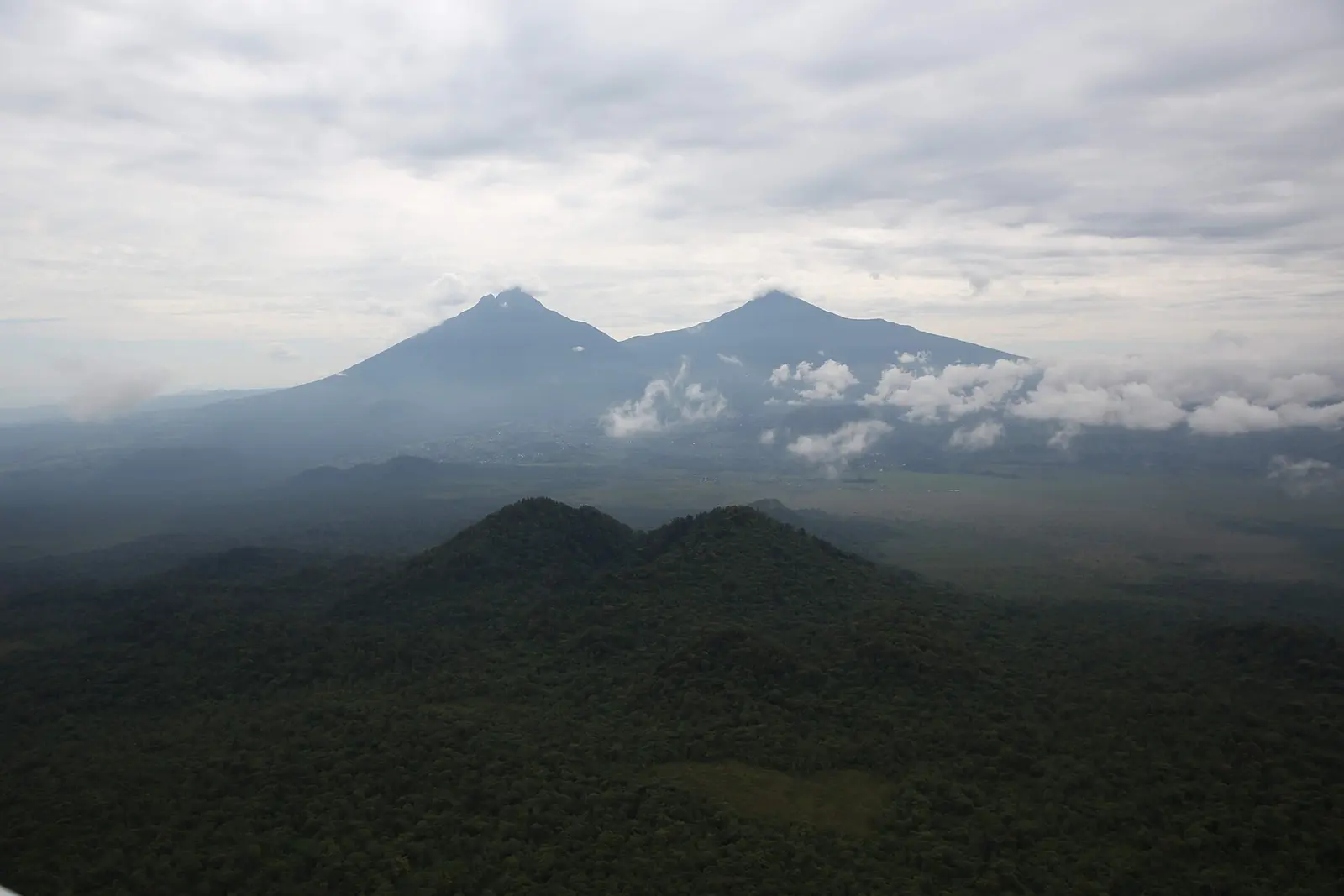
The Virunga chain has eight major volcanoes; five of them rise inside or along the edge of Volcanoes National Park. From west to east:
| Volcano | Height | Notes |
|---|---|---|
| Karisimbi | 4,507 m | Rwanda's highest point; two-day climb with an overnight camp. Its slopes are home to the Susa and Karisimbi gorilla families. |
| Bisoke (Visoke) | 3,711 m | A beautiful crater lake at the summit; a popular, steep day hike. Dian Fossey's Karisoke camp lay in the saddle between Bisoke and Karisimbi. |
| Sabyinyo | 3,669 m | The jagged "old man's teeth" where Rwanda, Uganda and the DRC meet. |
| Gahinga | 3,474 m | The smallest, sitting between Sabyinyo and Muhabura on the Uganda border. |
| Muhabura | 4,127 m | A near-perfect cone; a long, tough day hike with views across two countries. |
These are dormant volcanoes, deeply forested and quiet. Their active cousins, Nyiragongo and Nyamuragira, lie across the border in the DRC.
A short history
In 1925, the Belgian colonial administration created Albert National Park to protect the gorillas of the Virungas — the first national park in Africa. After independence, the Rwandan section became Volcanoes National Park. In 1967, American primatologist Dian Fossey established the Karisoke Research Center on the saddle between Karisimbi and Bisoke, and spent nearly two decades studying the gorillas and fighting poachers until her murder in 1985. Her book Gorillas in the Mist and the 1988 film made these animals world-famous.
Gorilla tourism began in Rwanda in the late 1970s, built on the idea that living gorillas could be worth more to local people than dead ones. After the devastation of 1994, the park was rebuilt into one of the best-managed protected areas in Africa. Today the Rwanda Development Board runs it, the Dian Fossey Gorilla Fund continues research from its Ellen DeGeneres Campus near Kinigi, and gorilla numbers across the Virungas have grown.
Habitats and wildlife
The park climbs from about 2,400 metres at its edge to over 4,500 metres on Karisimbi, passing through distinct vegetation zones:
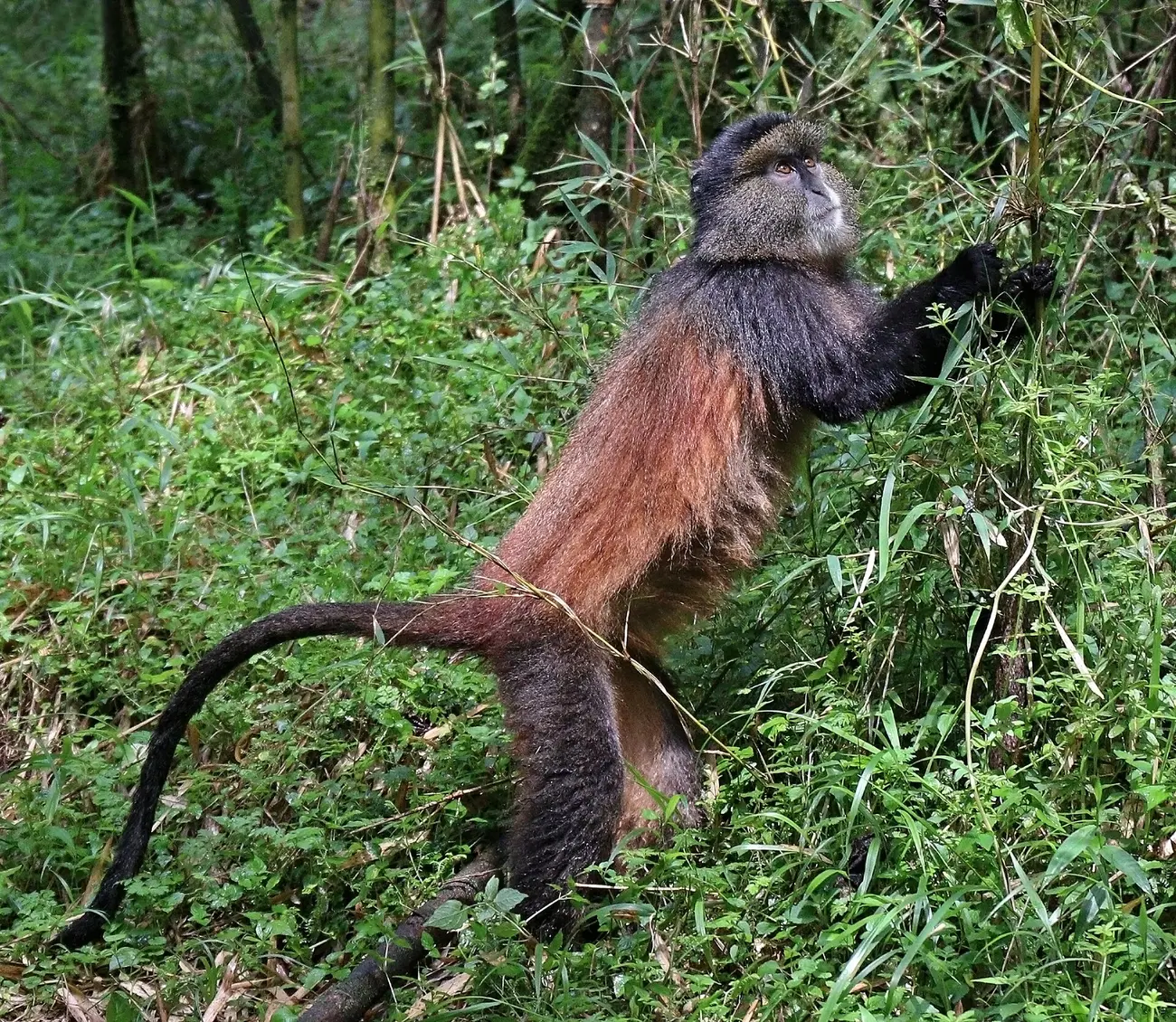
- Bamboo forest (roughly 2,500–3,200 m): dense stands where golden monkeys live and gorillas come to eat fresh shoots, especially in the rains.
- Hagenia–Hypericum woodland (around 2,800–3,300 m): open, moss-draped trees with a thick undergrowth of wild celery, nettles and thistles — classic gorilla habitat.
- Sub-alpine and alpine zones higher up: giant lobelias, giant groundsels and heather, reached by summit hikers.
Besides mountain gorillas and golden monkeys, the park shelters forest buffalo, a small and rarely seen population of forest elephants, spotted hyenas, bushbuck and black-fronted duiker. Birders come for Albertine Rift endemics such as the Rwenzori turaco, Rwenzori double-collared sunbird, handsome francolin and strange weaver.
Things to do in Volcanoes National Park
| Activity | Permit | Duration | Difficulty |
|---|---|---|---|
| Gorilla trekking | $1,500 | 2–7 hours | Easy to hard |
| Gorilla habituation | $1,500 | Most of a day | Hard |
| Golden monkey trekking | $100 | 2–4 hours | Easy–moderate |
| Dian Fossey tomb hike | $75 | 3–5 hours | Moderate |
| Bisoke crater lake hike | $75 | 6–7 hours | Hard |
| Karisimbi summit | $400 | 2 days | Very hard |
Non-gorilla permit prices are set by RDB and occasionally revised; we confirm current rates with every quote.
Around the park
- Gorilla Guardians Village (formerly Iby'Iwacu Cultural Village) near Kinigi: traditional dance, a replica king's house, banana beer, and a project supporting former poachers.
- Ellen DeGeneres Campus of the Dian Fossey Gorilla Fund: a striking research centre with a visitor exhibition on gorilla science and conservation.
- The Twin Lakes, Burera and Ruhondo: deep-blue lakes between steep terraced hills, lovely for a boat trip or picnic.
- Musanze Caves: a long lava tube near Musanze town, visited with a guide.
- Musanze town: markets, cafés and budget hotels, 20–25 minutes from Kinigi.
Getting there
Volcanoes National Park is about 2.5 hours north of Kigali on a well-paved road through Rulindo and Gakenke districts, then via Musanze to Kinigi. There's no airport at the park (helicopter transfers can be arranged privately). Most visitors come by private 4x4 with a driver-guide; see Kigali to Volcanoes National Park for options.
Weather
At 2,400 metres and above, it's cool. Expect roughly 10–20°C during the day near Kinigi, colder at night and higher on the mountains. Rain can fall in any month; the driest periods are June to mid-September and mid-December to February. More detail in best time for gorilla trekking.
Volcanoes National Park questions
Where is Volcanoes National Park?
In north-western Rwanda, in Musanze District, on the borders with Uganda and the DR Congo. The park headquarters is at Kinigi, about 12 km from Musanze town and roughly 105 km (2.5 hours) by road from Kigali.
How big is Volcanoes National Park?
About 160 square kilometres. It is part of the larger Virunga Conservation Area, which continues into Uganda's Mgahinga Gorilla National Park and the DRC's Virunga National Park.
What animals live in Volcanoes National Park?
Mountain gorillas and golden monkeys are the stars. The park also has forest elephants and buffalo (rarely seen), spotted hyena, bushbuck, black-fronted duiker and around 200 bird species, including many Albertine Rift endemics.
What else can you do in Volcanoes National Park besides gorillas?
Golden monkey trekking, the Dian Fossey tomb hike, climbing Bisoke to its crater lake or Karisimbi over two days, nature walks, and visits to nearby cultural villages, the Twin Lakes and Musanze caves.
Do I need a permit to enter Volcanoes National Park?
Yes — every activity in the park has its own permit (gorillas $1,500, golden monkeys $100, Dian Fossey hike $75, etc.), which includes entry for that activity.