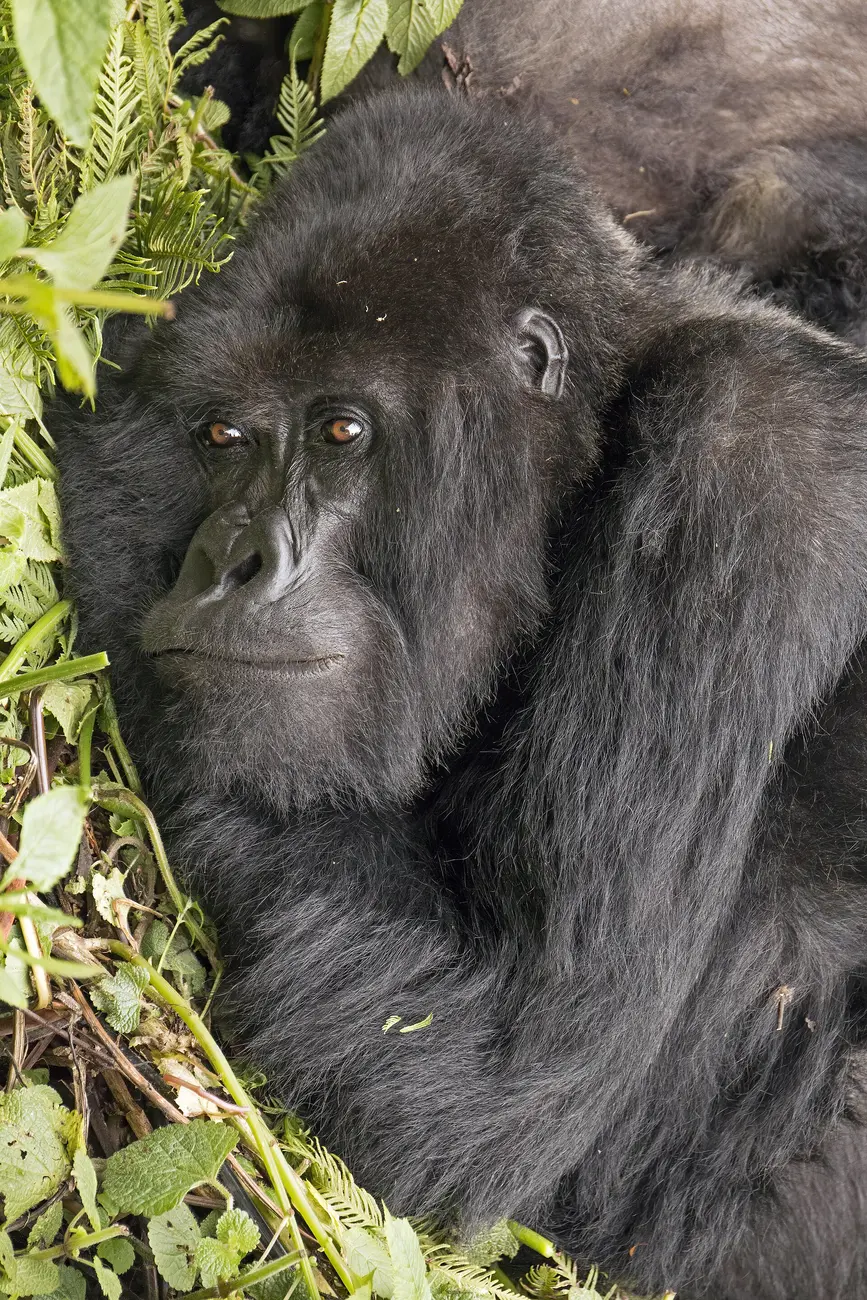
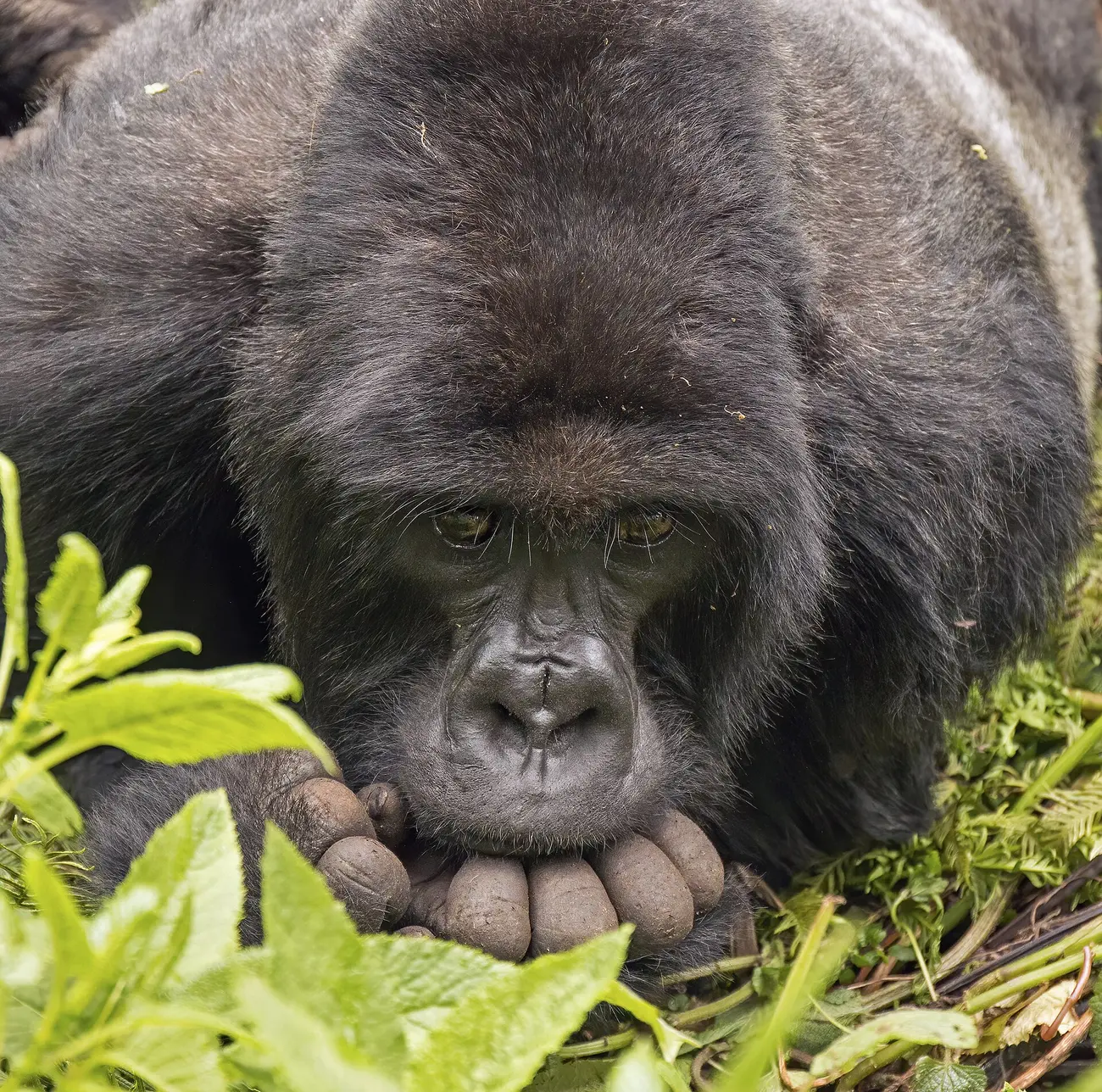
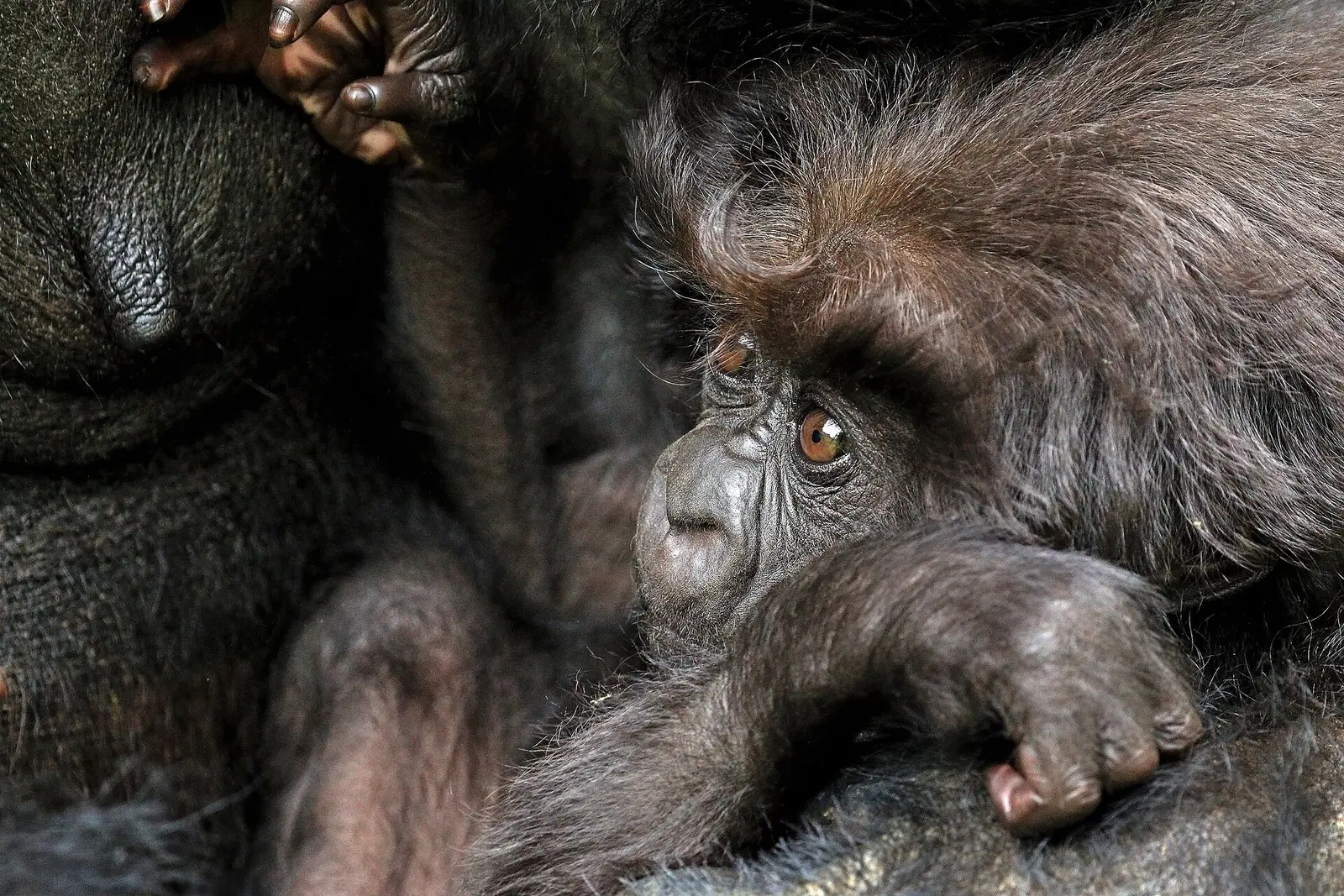
Search for gorillas in Rwanda and you'll see both "gorilla trekking" and "gorilla tracking". They mean the same thing for visitors — but the word "tracking" points to the people who make the whole experience possible.
Same activity, two names
Whether a brochure says trekking or tracking, you're booking the same thing: a $1,500 gorilla permit, a 7:00 AM briefing at Kinigi, a hike into Volcanoes National Park with a ranger guide, and one hour with a habituated gorilla family. "Trekking" emphasises the hike; "tracking" emphasises finding the gorillas. In Rwanda, "gorilla trekking" is the more common term.
Who the trackers are
Every habituated family is followed daily by a small team of trackers. They set out at first light to the place where the family built their night nests, then read the trail — bent stems, fresh feeding sign, dung, knuckle prints — until they find the gorillas. They stay with the family and radio the ranger guide, who leads your group in. Without them, sightings would be a matter of luck; with them, they're almost guaranteed.
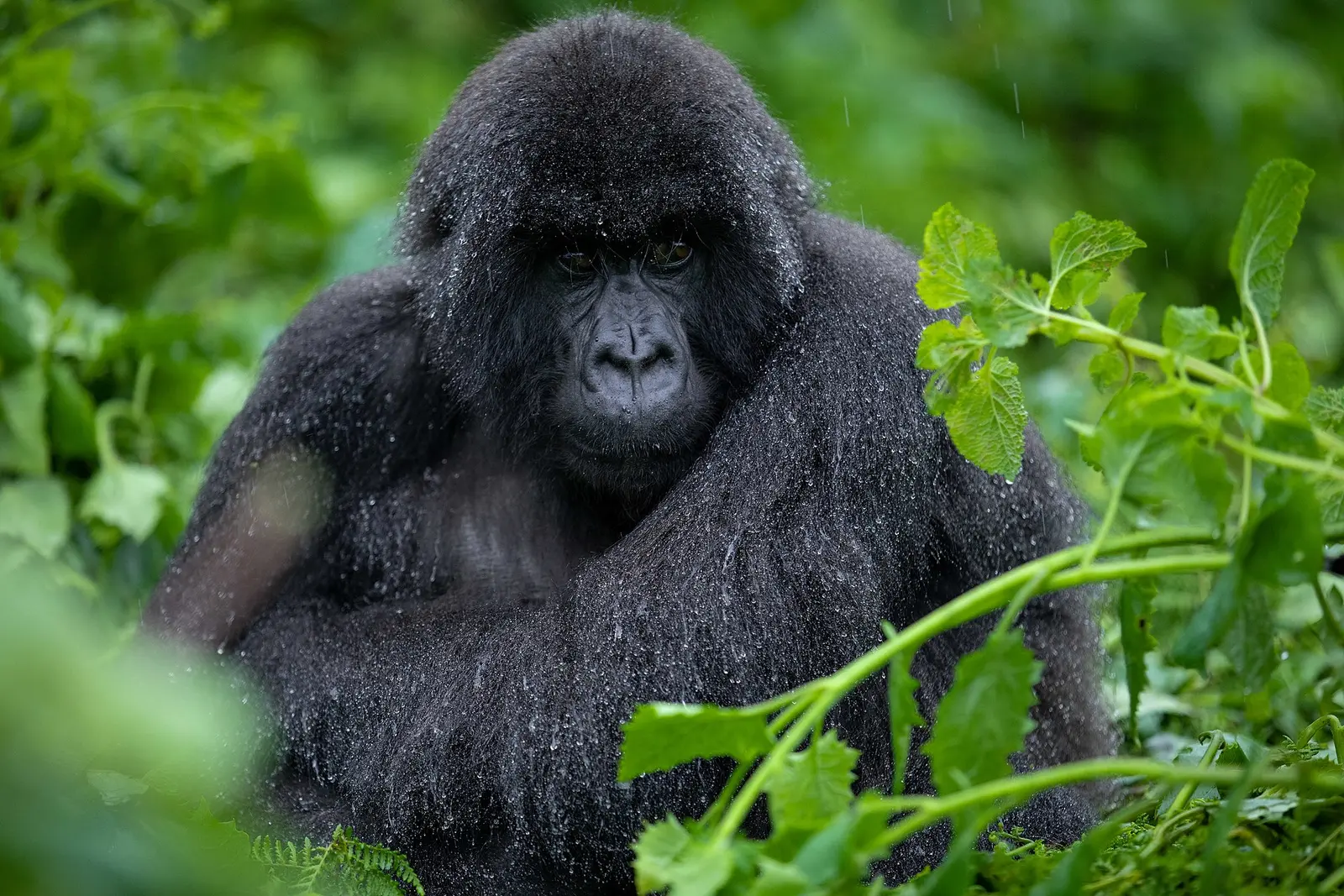
When "tracking" really is different
On the gorilla habituation experience, you do much more of the tracking yourself: joining researchers and trackers from early morning as they follow a family that is still being habituated, and spending up to about four hours with them in a group of no more than four. It's a deeper, more demanding experience than a standard trek.
Which should you book?
For most visitors, a standard trek — see our guide to what to expect on trek day. For photographers and return visitors who want more time, the habituation experience is worth considering.
Questions
Is it gorilla trekking or gorilla tracking?
Both terms are used for the same activity: hiking into the forest with a ranger to spend an hour with a habituated gorilla family. "Trekking" is more common in Rwanda and in travel searches.
What do gorilla trackers do?
Trackers set out at first light to find the gorilla family by following signs from the previous night's nests, then guide the ranger and visitors to them by radio.